
$125.00
FOR RESEARCH USE ONLY
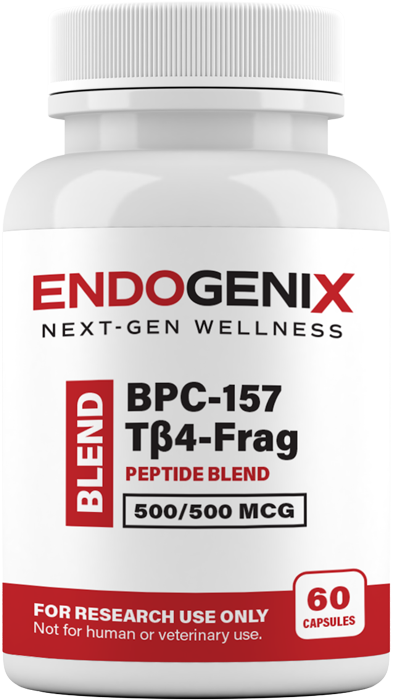
BPC-157 / Tβ4-Frag is a dual-peptide research formulation studied for its role in connective tissue biology, cellular signaling, and regenerative pathways. By combining two complementary research compounds, this blend provides a valuable model for investigating tissue remodeling, extracellular matrix regulation, and cellular repair mechanisms in laboratory settings.
FOR RESEARCH USE ONLY
$125.00
BPC-157 / Tβ4-Frag is a dual-peptide research formulation studied for its role in connective tissue biology, cellular signaling, and regenerative pathways. By combining two complementary research compounds, this blend provides a valuable model for investigating tissue remodeling, extracellular matrix regulation, and cellular repair mechanisms in laboratory settings.
Over 99%
In The USA
Lab Tested
Fast & Secure
Quick & Reliable
This compound is intended for laboratory research use only. It is not approved for human or veterinary use.
BPC-157 and Tβ4-Frag (Ac-SDKP) are two extensively studied research peptides with complementary roles in cellular signaling and connective tissue biology. Together, they provide researchers with a valuable model for investigating tissue remodeling, extracellular matrix regulation, angiogenesis, and cellular communication involved in regenerative processes.
Connective Tissue Research — Experimental studies have investigated the roles of BPC-157 and Ac-SDKP in tendon, ligament, muscle, and other connective tissue models, supporting research into tissue organization and structural integrity.
Cellular Signaling — Research suggests both compounds participate in signaling pathways involved in cellular migration, differentiation, and extracellular matrix regulation.
Angiogenesis Research — Experimental models continue to explore how these peptides influence vascular signaling and the formation of new blood vessels during tissue remodeling.
Fibroblast Biology — Investigations have examined the influence of both compounds on fibroblast activity, collagen organization, and cellular communication within connective tissues.
Regenerative Pathway Studies — This peptide combination provides researchers with a useful model for examining coordinated cellular responses involved in tissue maintenance and repair.
Growth Factor Signaling — BPC-157 has been studied for its interaction with growth factor pathways involved in connective tissue maintenance and cellular communication.
Extracellular Matrix Regulation — Tβ4-Frag (Ac-SDKP) has been investigated for its influence on extracellular matrix remodeling and cellular signaling associated with tissue organization.
Fibroblast Activity — Both peptides have been studied for their effects on fibroblast migration and communication within experimental tissue models.
Angiogenic Signaling — Research continues to explore the contribution of these compounds to vascular development and endothelial signaling during tissue remodeling.
Cellular Homeostasis — Experimental investigations suggest this peptide pairing may provide insight into coordinated cellular processes involved in maintaining tissue structure and physiological balance.
| Weight | 1 oz |
|---|---|
| Dimensions | .6 × .6 × 1.12 in |
Reviews
There are no reviews yet.