
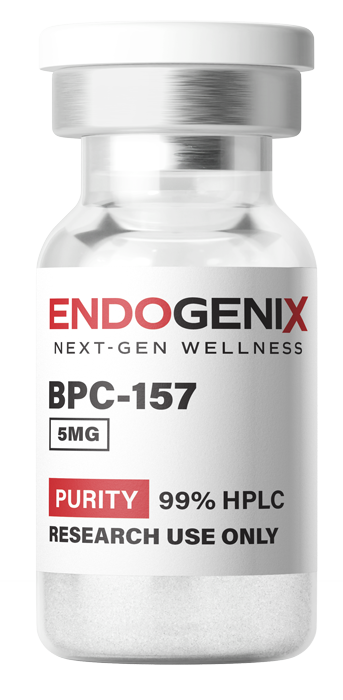
$55.00
105 in stock
FOR RESEARCH USE ONLY
BPC-157 is a penta-decapeptide composed of 15 amino acids. It is a partial sequence of the body protection compound (BPC) that was discovered in and isolated from human gastric juice.
FOR RESEARCH USE ONLY
$55.00
BPC-157 is a penta-decapeptide composed of 15 amino acids. It is a partial sequence of the body protection compound (BPC) that was discovered in and isolated from human gastric juice.
105 in stock
Over 99%
In The USA
Lab Tested
Fast & Secure
Quick & Reliable
This compound is intended for laboratory research use only. It is not approved for human or veterinary use.
Extensive preclinical and exploratory research suggests that BPC-157 exhibits a wide range of regenerative and protective properties across multiple biological systems. The following summarizes several key areas of scientific interest based on findings from laboratory and animal models.
Tissue & Connective Repair — In preclinical studies, BPC-157 has been shown to accelerate the healing of tendons, ligaments, and skeletal muscle. Research suggests that it enhances fibroblast migration, improves cellular survival under stress, and promotes collagen synthesis to support the repair of connective tissue structures. These effects make BPC-157 a compound of particular interest in regenerative and sports-science research focused on soft tissue recovery.
Angiogenesis & Collagen Support — BPC-157 stimulates angiogenesis—the growth of new blood vessels—and upregulates collagen production, both essential for nutrient delivery and tissue rebuilding. This dual effect supports oxygenation of damaged tissue while strengthening structural integrity during the healing process.
Anti-Inflammatory & Cytoprotective Actions — Studies indicate that BPC-157 regulates inflammatory cytokines and oxidative stress markers, reducing cellular damage in injury models. By moderating the inflammatory response, it provides cytoprotective effects that contribute to faster recovery and reduced tissue degradation in preclinical testing.
Gastrointestinal & Mucosal Integrity — BPC-157 has also been studied for its influence on gut and mucosal tissue. In animal models of ulcers, colitis, and intestinal permeability (“leaky gut”), it supports epithelial regeneration, stabilizes mucosal barriers, and maintains gastrointestinal integrity—highlighting its broad systemic potential.
Neuroprotective & CNS Effects — Preliminary evidence from animal models suggests that BPC-157 may support neurological recovery following stroke or spinal injury. It also appears to influence neurotransmitter regulation, possibly through gut–brain axis pathways, making it a topic of growing interest in neuroregenerative research.
Although the precise mechanisms behind BPC-157’s regenerative effects remain under investigation, several hypotheses have emerged from existing research. These mechanisms help explain the diverse biological responses observed in preclinical models.
Growth Factor Upregulation — In tendon fibroblast models, BPC-157 has been observed to increase growth hormone receptor expression, amplifying cellular signaling involved in tissue repair and regeneration. This mechanism may help explain its effects on tendon and ligament healing seen in multiple studies.
Nitric Oxide (NO) System Modulation — BPC-157 interacts with the nitric oxide system by enhancing endothelial nitric oxide synthase activity. This supports vascular tone, blood flow, and tissue perfusion, all critical for recovery and cellular oxygenation during the healing process.
Angiogenesis Stimulation — The peptide promotes new blood vessel formation, a key component of tissue repair. Through angiogenesis, BPC-157 helps ensure that damaged regions receive the nutrients and oxygen necessary for proper regeneration.
Cell Migration & Survival Enhancement — Rather than indiscriminately driving proliferation, BPC-157 supports the migration and survival of fibroblasts and other repair cells under oxidative stress conditions. This contributes to more efficient tissue remodeling and cellular resilience in injury models.
Pharmacokinetics & Metabolism — Research shows that BPC-157 has a short biological half-life—typically under 30 minutes—and undergoes rapid enzymatic breakdown into smaller peptide fragments. These metabolites are excreted primarily through urine and bile, with bioavailability depending on the administration route.
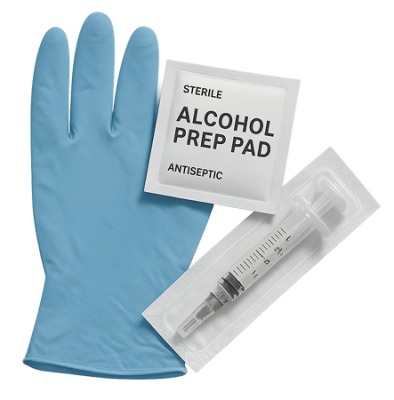
Store in a cool, dry place away from light. Refrigerate after reconstitution. For long term storage, freezing at -20°C is recommended to maintain integrity. Maintain aseptic technique while handling.
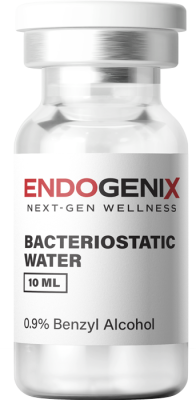
This product is in powder form and is not reconstituted. Free Bacteriostatic Water included with every purchase to reconstitute the compound.
| Weight | 1 oz |
|---|---|
| Dimensions | .6 × .6 × 1.12 in |
Reviews
There are no reviews yet.